Okay, I was commenting on this:
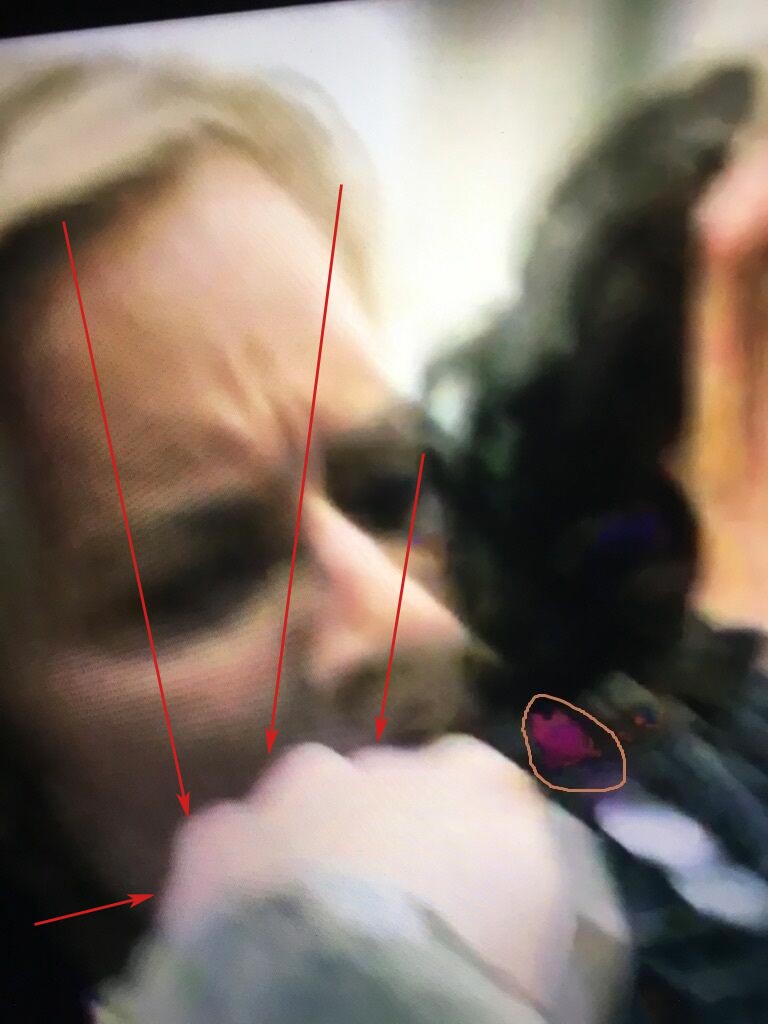
Nevertheless, I believe they are related. The issue I commented on is within the standard tolerance on an LCD panel, I would say. What you are referring to is definitely not and this is something that Samsung should fix.
If you look closely at the two different things we have observed notice that your example is a color transistion from black (hair) to dark grey (his shirt). Mine is a color transition from light human skin (hand) to darker human skin (face)
The big difference in how the LCD panel reacts can be caused by which color transistion it has to reproduce. Dark grey to black is one of the more tricker ones. As you may know, LCD manufacturers often state something like "5 ms" or "10 ms" but that is the fastest transition. Some color transitions can take up to 100+ ms in severe cases. That's why manufacturers employ the overdrive systems in the first place.
The thing you are observing is very easy to reproduce with our monitorTest software, if you can get it to run. Go to the section "trailing" and try moving the square box (set it to black) around over a 'black to white' gradient. Notice if it exhibites red color trailing when pulling the black box over dark grey (or other tones). If this is indeed overdrive trailing and if it is the fault of the LCD panel in your TV, you should be able to determine that quite easily with monitorTest.